Sewer Smoke Testing
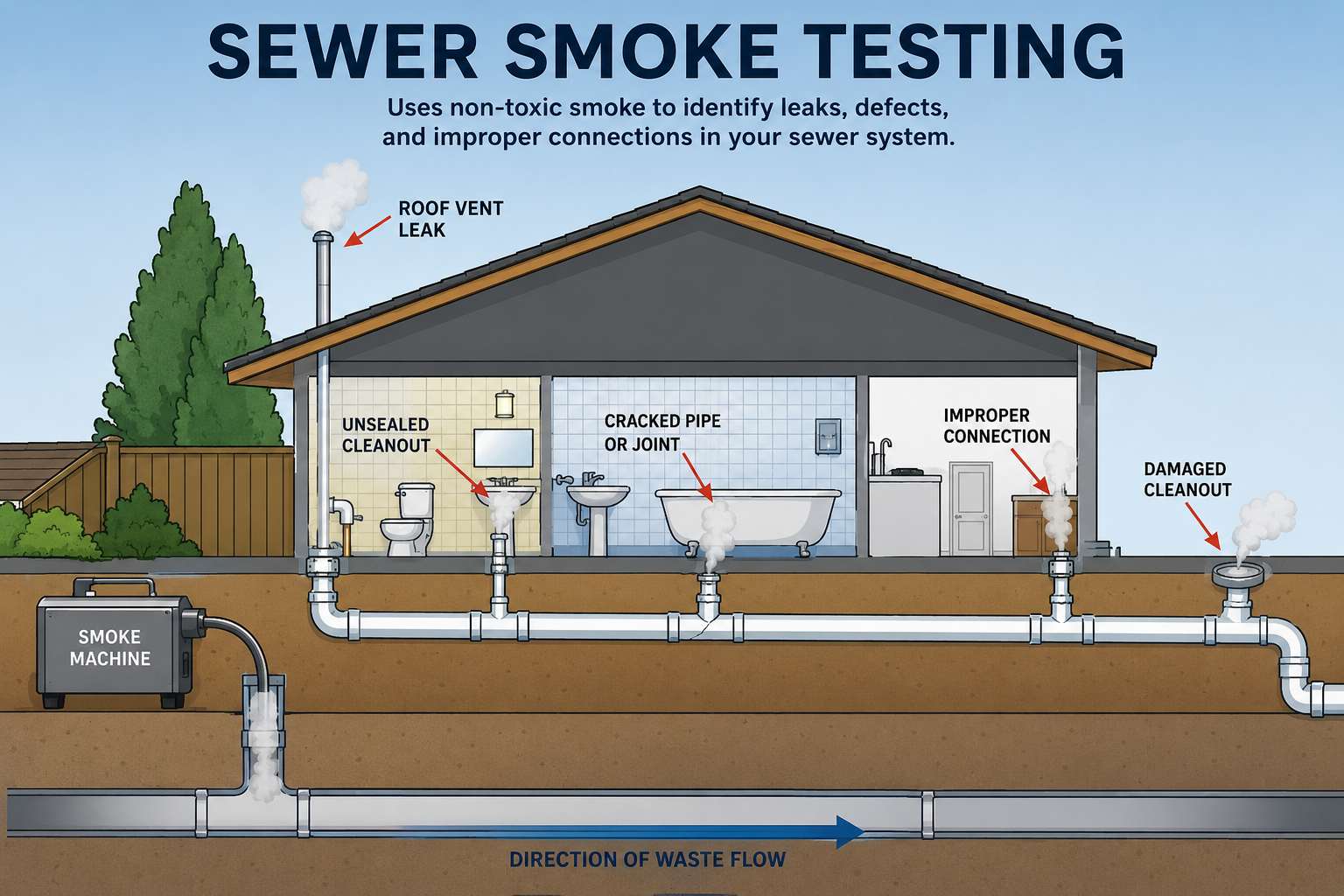
Sewer smoke testing helps identify hidden leaks, improper connections, damaged drain lines, and other problems that may allow sewer odors or gases to enter a home or building.
When Is Sewer Smoke Testing Needed?
Smoke testing is a useful diagnostic tool when sewer odors, hidden leaks, or drain system problems are difficult to locate through a visual inspection alone.
Persistent Sewer Odors
If sewer smells are entering a home or building, smoke testing can help locate openings, failed seals, or other pathways allowing odors inside.
Suspected Hidden Leaks
Smoke can reveal leaks or openings in drain and vent piping that may not be visible during a normal inspection.
Recurring Drain Problems
When drain issues continue after cleaning or repairs, smoke testing can help identify additional defects or improper connections.
After Plumbing Changes
Testing can help verify that drain and vent connections are properly sealed after remodeling, repairs, or plumbing modifications.
Suspected Vent Problems
Smoke testing can help identify damaged, disconnected, or improperly installed vent lines within the plumbing system.
Hard-to-Find Plumbing Defects
When the source of a plumbing odor or leak is unclear, smoke can provide a visible indication of where the problem is located.
Find Hidden Sewer & Drain Problems
By introducing visible, non-toxic smoke into the drain and sewer system, problem areas can often be identified quickly without unnecessary demolition.
Cracked Drain or Sewer Pipes
Smoke escaping from a damaged pipe can help pinpoint cracks, separations, or other defects in the plumbing system.
Loose or Failed Pipe Joints
Improperly sealed fittings and deteriorated joints can allow smoke, sewer gases, and odors to escape.
Open or Damaged Cleanouts
Missing caps, damaged fittings, or poorly sealed cleanouts can create pathways for sewer odors to enter the property.
Improper Plumbing Connections
Smoke can help identify unauthorized, incorrect, or poorly sealed drain and sewer connections.
Vent System Defects
Broken, disconnected, or improperly installed vent piping may become visible when smoke escapes from unexpected areas.
Hidden Odor Entry Points
Smoke can reveal where sewer gases are entering through walls, cabinets, floors, fixtures, or other concealed areas.
Our Sewer Smoke Testing Process
3G Plumbing uses a controlled testing process to help identify hidden sewer leaks, venting problems, and other plumbing defects.
Evaluate the Problem
We review the symptoms, odor locations, affected fixtures, and plumbing history to determine where testing should begin.
Prepare the System
The plumbing system is prepared for testing so smoke can move through the drain and vent lines in a controlled manner.
Introduce Test Smoke
Non-toxic test smoke is introduced into the sewer system while we inspect for smoke escaping from unexpected locations.
Identify the Source
Any visible smoke escape points help us locate likely leaks, failed seals, damaged piping, or improper connections.
Find the Source of the Problem
Sewer odors and hidden plumbing problems can be difficult to track down. Smoke testing gives 3G Plumbing another diagnostic tool to help locate problems that may not be visible during a standard plumbing inspection.
Targeted Diagnosis
Smoke testing can help narrow down the source of sewer odors, leaks, failed seals, and other difficult-to-locate plumbing problems.
Find Hidden Defects
Escaping smoke can reveal problems in concealed drain and vent piping that may otherwise be difficult to identify.
Clear Recommendations
Once the source of the problem is identified, we explain what we found and recommend the appropriate plumbing repair.
Professional Plumbing Repair
If testing identifies a plumbing defect, 3G Plumbing can determine the appropriate next steps to correct the problem.
Need Help Finding a Sewer Odor or Hidden Plumbing Problem?
3G Plumbing can use sewer smoke testing to help locate hidden leaks, failed seals, vent problems, and other defects that may be allowing sewer gases or odors into your home or building.